
Short Answer
The most useful things to do in Merida are centered on Plaza Grande, Paseo de Montejo, and museums that cover the city’s history or railway heritage. Plan those as city experiences, then set aside a separate day for a regional outing such as Uxmal or a cenote. That split keeps the historic center and the wider Yucatán itinerary from competing for the same day.
| Day Type | Good Fit | Planning Choice |
|---|---|---|
| Historic center | Plaza Grande and nearby landmarks | Keep the day focused on central Mérida. |
| Avenue and culture | Paseo de Montejo, mansions, and museums | Allow time for cultural stops along the avenue. |
| Regional outing | Uxmal or a cenote | Plan it separately from the main city walk. |
The best things to do in Merida depend on whether you want a city day or a day beyond the city. Plaza Grande, Paseo de Montejo, and Mérida’s museums make a strong urban itinerary; Uxmal and cenotes belong in a separate regional plan. That distinction matters more than trying to fit every well-known Yucatán stop into one schedule.
Use the city’s historic core for plazas and civic landmarks, then choose a distinct cultural stop rather than stacking similar sights. For a broader overview of the state, start with our Yucatán travel guide.
Choose A City Day Before Adding A Regional Excursion
Begin by deciding whether this day is for Mérida itself or for the surrounding region. The distinction is easy to lose in search results, where city attractions, archaeological sites, cenotes, and coastal outings can appear in one long list. For a manageable city plan, give the historic center and one additional cultural stop the main attention.
Keep Uxmal or a cenote for another day. Both are regional ideas, not quick add-ons to a Plaza Grande visit; check current transport and entry details before fixing the schedule. If you have several days, make one an urban day and another a day outside the city. Our Yucatán road trip itinerary can help you think through a wider route without treating every stop as part of Mérida’s center.
This approach also makes it easier to choose your base. If your priority is museums, historic streets, and city dining corridors, keep your plan centered on Mérida. If your priority is a regional site, build the day around that outing rather than squeezing it between city stops.
Explore Plaza Grande And Its Historic Setting
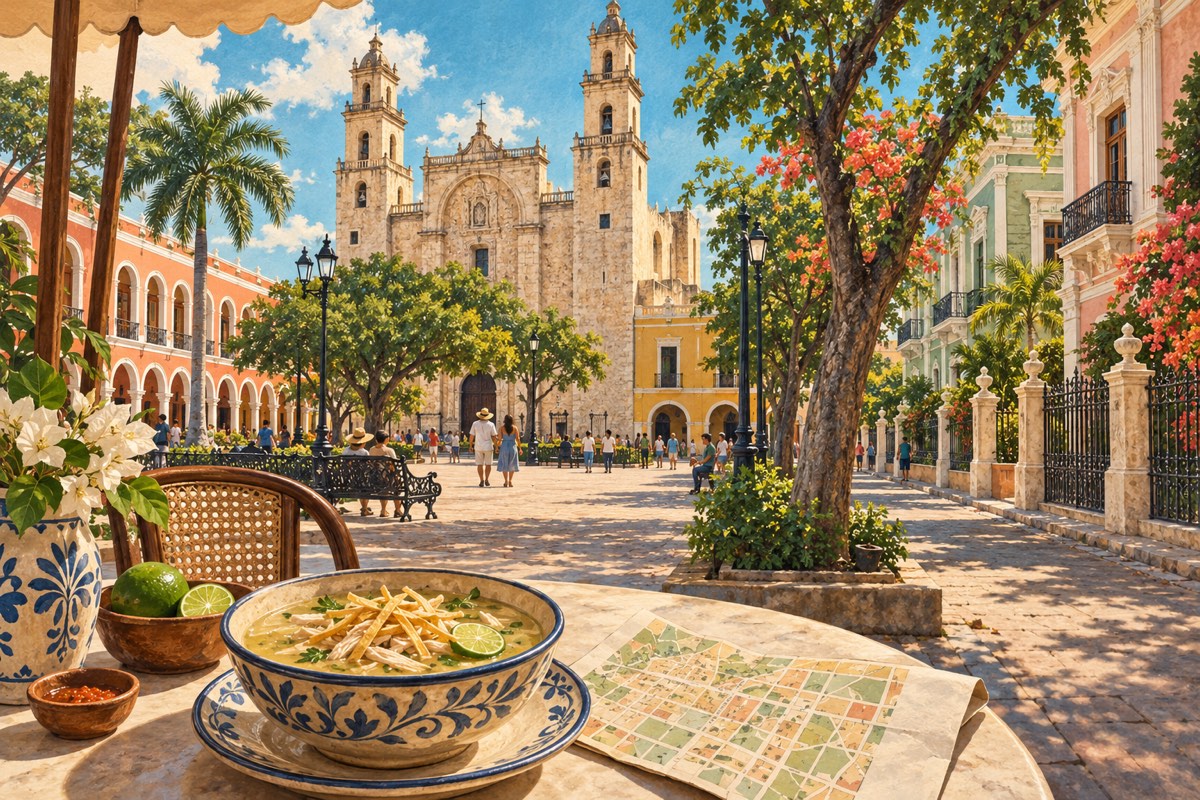
Plaza Grande is the clearest starting point for a first central-city visit. The square is framed by the cathedral, the government palace, and Casa de Montejo, so a short walk through the surrounding blocks gives you several different views of Mérida’s civic and historic setting. The Yucatán tourism guide identifies these landmarks as the central square’s defining neighbors.
For a simple first visit, walk the plaza and look at the buildings around its edges before choosing whether to go inside any of them. That leaves room for an unhurried pause and avoids turning the square into a checklist. If you want to add a museum or another stop, decide on it after seeing how much time you want to spend in the center.
Do not build your schedule around an assumed performance or market. Event programs and street activity can change, and the information here does not verify a current schedule. Check what is happening locally for your dates rather than treating a particular evening program as guaranteed.
What Belongs In A First Central-City Visit?
Start with Plaza Grande and its surrounding cathedral, government palace, and Casa de Montejo. Those nearby landmarks give you a coherent first look at the center; add another attraction only if you want to extend the city walk.
Follow Paseo De Montejo For Mansion And Museum Stops
Paseo de Montejo has a different character from Plaza Grande. The tourism guide describes it as an avenue lined with historic mansions and cultural stops, including Palacio Cantón. Use it for an avenue-and-museum outing, rather than treating it as another square on the central-plaza route.
A useful plan is to choose one mansion or museum as the main stop and leave the rest of the time for the avenue itself. That gives you a clear reason to go there without assuming that every building is open or that current exhibits follow a fixed schedule. Verify opening details and any admission requirements for your dates before making a timed plan.
If you are choosing between the two areas, Plaza Grande is the better anchor for nearby civic landmarks, while Paseo de Montejo is the choice for mansion architecture and cultural institutions. The difference is the experience you want, not a claim that one area is better overall.
What Makes Paseo De Montejo Different From Plaza Grande?
Plaza Grande centers on a public square framed by major civic and historic buildings. Paseo de Montejo is an avenue associated with historic mansions and cultural stops such as Palacio Cantón. Choose the square for a compact landmark visit and the avenue for a separate cultural outing.
Compare A History Museum With Railway Heritage
Mérida’s museums can add different kinds of context to a city visit. Compare Museo de la Ciudad de Mérida for city history with Museo del Ferrocarril for railway heritage, both named by Yucatán tourism. Choose the subject that interests you rather than trying to visit every institution in one day.
Either museum can anchor a day that also includes a plaza or avenue. Check current opening information and exhibits before you go.
For a visit with limited time, pick one museum and pair it with the setting that fits: the historic center for civic landmarks, or Paseo de Montejo for mansions and cultural stops. That choice gives the day a theme without making unsupported assumptions about how long each visit will take.
Which Museums Offer Different Kinds Of History?
The city-history museum and railway museum cover different subjects, while Palacio Cantón is a cultural stop on Paseo de Montejo. Pick according to the story you want to explore, then confirm current visitor details before setting your schedule.
| City Experience | What Makes It Different | Current Check |
|---|---|---|
| Museo de la Ciudad de Mérida | Focuses on Mérida’s history | Verify current hours, exhibits, and admission details. |
| Museo del Ferrocarril | Focuses on railway heritage | Verify current hours, exhibits, and admission details. |
| Palacio Cantón | A cultural stop on Paseo de Montejo | Check current access and exhibition information. |
Choose A Dining Corridor Or A Regional Outing
Choose Calle 60 for a dining route between Plaza Grande and the Santa Ana area, or Calle 47 between the Remate de Paseo de Montejo and Parque La Plancha. Yucatán tourism also highlights local markets and regional dishes such as salbutes, panuchos and sopa de lima. Compare current menus and opening details before choosing a specific place.
A meal in Mérida can be the final part of a city day. A regional outing is a different decision: the guide places Uxmal and cenotes beyond the city-center category. Do not assume you can visit one of those sites and still have a relaxed day exploring the central landmarks. Instead, choose a regional focus and build the day around it.
If a cenote is part of your plan, our guide to cenotes in Yucatán can help you compare options. For Uxmal, treat it as its own regional excursion and check current access and transport details before you commit.
Is Uxmal A City-Center Stop?
No. Uxmal is a regional outing rather than a stop in Mérida’s central city itinerary. Plan it as the focus of a separate day and confirm transport and visitor details for your dates.
Use Mérida As A Base Without Overloading The Stay
Mérida can work as a base when your priorities include city landmarks and separate regional outings. The practical trade-off is that an itinerary built around day excursions leaves less time for the city’s plazas, avenue, and museums. Decide which experience matters most before adding stops, rather than trying to make every day cover both.
For a compact stay, reserve one day for central Mérida and another for a single regional focus. With more time, keep the same distinction but add another city or regional day according to your interests. A wider itinerary may include cenotes or other parts of the state; our Yucatán overview and road-trip guide can help you consider how the pieces fit.
For accommodation, compare a central hotel, a restored hacienda, a hostel or a rental against the days you want to spend in the city and beyond it. Check the exact address and onward transport for regional outings. Mérida's Manuel Crescencio Rejón International Airport and ADO intercity services are arrival options to investigate; confirm your actual ticket, arrival point and final journey to the property.
Yucatán state is currently Level 1 on the U.S. travel advisory, which means exercise normal precautions. That advisory level is not a guarantee that every outing is risk-free, nor does it rank Mérida against other cities. If your route crosses into another state, check the guidance for that state too. The U.S. Mexico travel advisory provides state-specific guidance; conditions and recommendations can change.
Frequently Asked Questions
How Many Days Should You Plan For Mérida?
There is no single required length. A useful starting plan is one day for central Mérida and a separate day for a regional outing such as Uxmal or a cenote. Add time if you want more museums or multiple excursions, and check current opening and transport details before fixing the schedule.
Can You Visit Uxmal And Mérida’s Main Sights In One Day?
They are different itinerary choices: Uxmal is a regional outing, while Plaza Grande, Paseo de Montejo, and the city museums are Mérida experiences. Avoid building a city schedule around an assumed return time from Uxmal. Plan Uxmal as the main focus and check transport and visitor details for your dates.
Are Mérida’s Museums Free, And What Are Their Opening Hours?
Fees and opening hours vary by institution and date. Before you go, check the individual museum’s current visitor information, including whether an exhibit or access arrangement has changed. The city-history museum, railway museum, and Palacio Cantón cover different interests.
What Is The Difference Between Calle 60 And Calle 47 For Dining?
Calle 60 runs from Plaza Grande toward Calle 47 by Santa Ana, while the Calle 47 corridor connects the Remate de Paseo de Montejo with Parque La Plancha. Choose the stretch that fits your sightseeing route, then compare current menus and hours for individual dining options.
Does Yucatán’s Level 1 Advisory Mean Every Outing Is Risk-Free?
No. The U.S. advisory’s Level 1 guidance for Yucatán means exercise normal precautions; it is not a guarantee of risk-free travel or a ranking of cities. Check the current advisory before departure, and review separate state guidance if your itinerary crosses beyond Yucatán.
Give The City And The Region Their Own Time
Build your Mérida plan around one city experience, such as Plaza Grande or Paseo de Montejo, then decide whether a museum or a regional outing deserves the next day. Check current visitor details before setting a fixed schedule. When you know your dates, search TravelMexico Reservations for available trip options.
Sources And Further Reading
Official sources checked October 15, 2026. Recheck changing advisories, access and booking terms before travel.