
TRAVELMEXICO
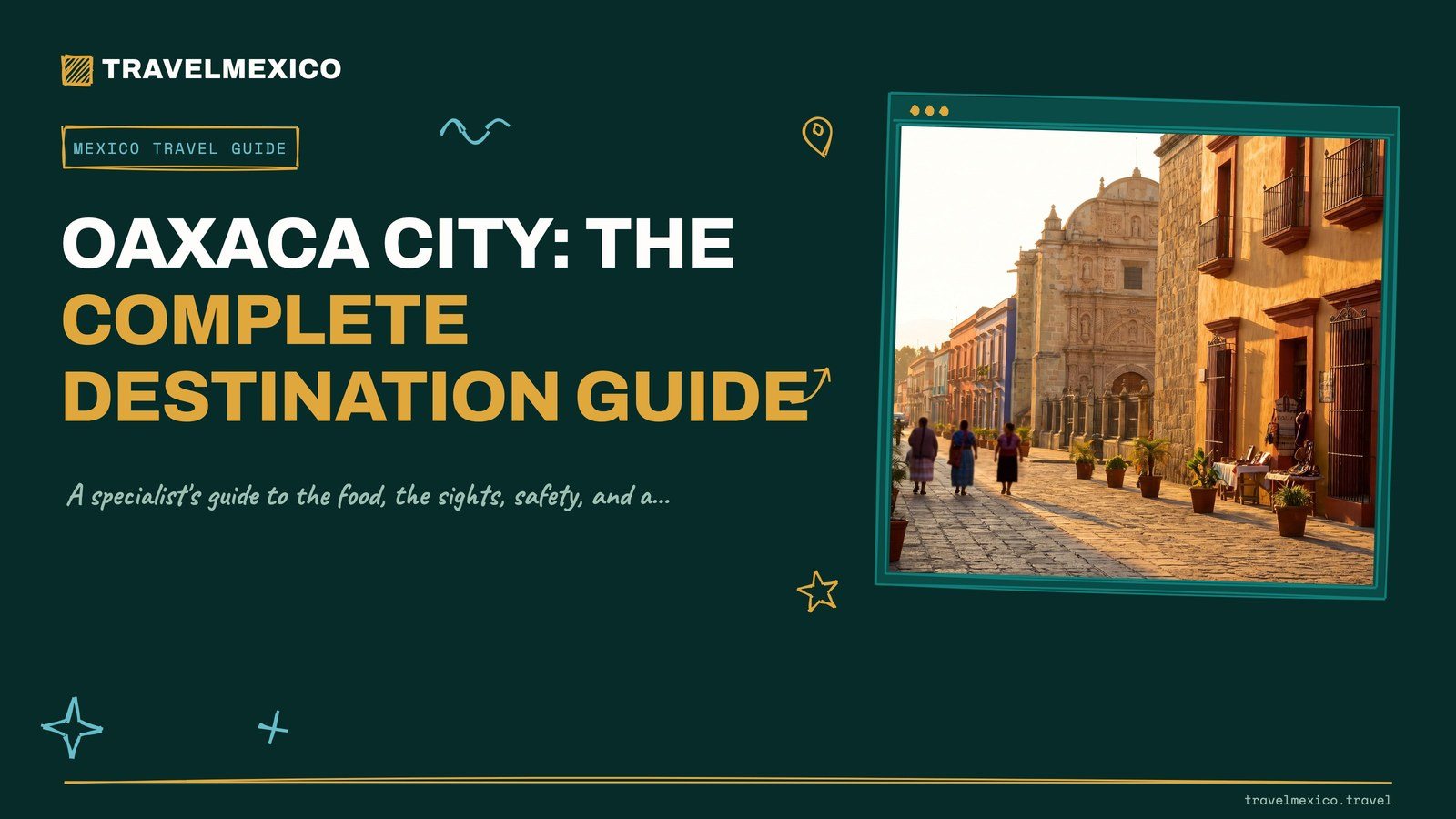
Oaxaca City: The Complete Destination Guide
A specialist's guide to the food, the sights, safety, and a four-day plan for southern Mexico's most soulful city.
The short answer
The best things to do in Oaxaca City are wandering the Zocalo and Santo Domingo, eating your way through Mercado 20 de Noviembre, sipping mezcal, and day-tripping to Monte Alban and Hierve el Agua. It is walkable, safe for visitors, and famous for its food.
Oaxaca de Juarez sits in a high valley in southern Mexico, ringed by mountains and famous for its kitchens. The historic center is compact and walkable, the food is arguably the best in the country, and the valley around it holds ancient ruins, mezcal villages and mineral springs.
The essential things to do in Oaxaca City cluster around the Centro Historico, and you can cover most of them on foot in two days. Add a day or two for Monte Alban and Hierve el Agua and you have a trip. Below are the sights, a short food guide, plain notes on safety and seasons, and a four-day plan. For the capital, see our Mexico City guide.
| Getting there | Fly into Oaxaca (OAX) airport, direct from Mexico City and some US hubs, or take a first-class bus or the newer highway from CDMX |
|---|---|
| Time needed | 3 to 4 days for the city and nearby valley sights; a week for a relaxed trip with more day trips |
| Best time to visit | October to April for dry, mild weather; late October for Day of the Dead; July for the Guelaguetza festival |
| Good for | Food lovers, culture and history, mezcal, markets, walkable historic centers, day trips |
| Getting around | The Centro is walkable; taxis and colectivos reach the valley towns and ruins |
Best things to do in Oaxaca City
Start in the Zocalo, the tree-shaded main square. It is the social heart of the city, lined with arcaded cafes and often hosting music, markets, and the occasional protest, which is a normal part of local civic life. Just north, the pedestrian Andador Turistico leads you past galleries and shops toward the star sight.
The Templo de Santo Domingo de Guzman is Oaxaca's showpiece: a Baroque church with a breathtaking gilded interior. Next door, the former convent houses the Museo de las Culturas de Oaxaca, whose collection includes the treasure recovered from Tomb 7 at Monte Alban, and behind it sits the Jardin Etnobotanico, a garden of native Oaxacan plants you visit on a guided tour.

No visit is complete without the markets. Mercado 20 de Noviembre is famous for its Pasillo de Humo, the smoke alley, where you pick raw meat and have it grilled in front of you. The neighboring Mercado Benito Juarez sells chocolate, mole pastes, cheese, and crafts. For a bigger, more local scene, the sprawling Central de Abastos is worth a wander if you like busy markets.
Oaxaca is also a craft and mezcal hub. You can taste mezcal at bars around the center or take a tour out to the palenques, the small distilleries in valley villages such as Santiago Matatlan. And when you are ready to leave the city, the two great half-day trips are the ancient hilltop ruins of Monte Alban and the petrified mineral springs of Hierve el Agua.
The Oaxaca food scene
Oaxaca is the culinary capital of Mexico, and the food alone justifies the trip. It is the land of mole, the complex sauces that can carry dozens of ingredients; locals speak of seven classic moles, from the dark, chocolate-tinged mole negro to the bright green mole verde. Try mole over chicken or turkey at a market stall or a sit-down restaurant to taste the difference.
Other must-eat dishes: the tlayuda, a large crisp tortilla layered with beans, cheese, and meat, sometimes called a Mexican pizza; quesillo, the stringy Oaxacan cheese; tasajo and cecina, the thin grilled meats of the smoke alley; chapulines, seasoned grasshoppers eaten as a snack; and tejate, a pre-Hispanic corn and cacao drink sold in markets. Wash it down with mezcal or a cup of Oaxacan hot chocolate. We keep prices out of this guide because they change, so check current menus on arrival.
Is Oaxaca safe?
Oaxaca City is generally considered one of the safer destinations in Mexico for visitors, and tourism is central to its economy. The historic center is well traveled and pleasant to walk by day and in the busy evening hours. As anywhere, use normal city sense: watch your belongings in crowded markets, use registered taxis or a trusted app, and avoid flashing valuables. Political demonstrations and marches around the Zocalo are common and usually peaceful; simply give them room. Always check your government's current travel advisory before you go, since guidance covers the whole state as well as the city. For comparison, see our note on whether Mexico City is safe.
Best time to visit Oaxaca
The most comfortable window is the dry season, roughly October through April, with mild days and cool evenings at Oaxaca's high elevation. The rainy season runs in summer, when afternoon showers are common but the valley turns green.
Two dates are worth planning a trip around. Day of the Dead (Dia de los Muertos), in late October and early November, is one of the most moving times to be here, with marigold-covered altars, decorated cemeteries, and processions; the city fills up, so book early. In July, the Guelaguetza brings dancers and delegations from across the state for a huge celebration of Indigenous culture. Both are peak periods, so reserve hotels well in advance.

Where to stay in Oaxaca
For a first visit, stay in the Centro Historico. Being inside or just around the historic center means you can walk to Santo Domingo, the Zocalo, the markets, and most restaurants, and return easily after dinner. The area around Santo Domingo and the Andador is the most atmospheric, while streets a few blocks out are quieter and often better value.
Neighborhoods such as Jalatlaco, a colorful, artsy barrio just east of the center, and Xochimilco, uphill to the north (a local Oaxaca City barrio, not to be confused with the canal district in Mexico City), are charming and still walkable to the core. Whatever you choose, aim to be within walking distance of the Centro so you spend your time exploring rather than commuting. Our specialists can match you to the right base and book it for you.
Ready to go? Plan and book your Oaxaca trip with a specialist.
Plan your Oaxaca staySearches and bookings are done through MoreTravel4Less. Opens in a new tab.
Oaxaca itinerary: 4 days
Four days is a comfortable amount of time to enjoy the city and see the headline valley sights without rushing. Here is a simple outline you can adapt.
Zocalo, Santo Domingo and its museum, the botanical garden, and a first mezcal tasting. Dinner around the center.
Morning at Mercado 20 de Noviembre and Benito Juarez, afternoon at the ruins of Monte Alban above the city.
Head out to Hierve el Agua and the mezcal village of Santiago Matatlan, or add Mitla and the Tule tree, on a tour or by colectivo.
Explore Jalatlaco, browse craft workshops and galleries, and end with a long Oaxacan dinner.
If you have a week, add more day trips and slow the pace. Oaxaca rewards lingering. For a fuller regional plan, our team can build a custom route.
Oaxaca vs Mexico City: which should you visit?
These two cities suit different moods, and many travelers combine them. Mexico City is a vast, cosmopolitan capital with world-class museums, endless dining, and huge day-trip options like Teotihuacan; it can feel overwhelming and takes longer to cover. Oaxaca City is smaller, calmer, and more walkable, with a stronger sense of Indigenous culture, artisan crafts, and a food scene many rank as Mexico's finest.
If you want big-city energy and variety, lead with the capital; if you want food, culture, and a relaxed pace, lead with Oaxaca. The good news is they connect easily by a short flight or bus, so a week split between the two is one of Mexico's best trips.
Common questions
How many days do you need in Oaxaca City?
Three to four days is enough for the historic center plus the main valley sights like Monte Alban and Hierve el Agua. A week lets you add more day trips and slow down.
Do you need a car in Oaxaca?
No. The Centro is walkable, and taxis, tours, and colectivos reach the ruins, mezcal villages, and springs. A car is optional if you want to explore the valley independently.
What food is Oaxaca famous for?
Mole in its many varieties, tlayudas, quesillo cheese, grilled tasajo and cecina, chapulines, and mezcal. The markets, especially Mercado 20 de Noviembre, are the best place to try them.
Is Oaxaca better than Mexico City?
Neither is better; they are different. Oaxaca is calmer, more walkable, and food and culture focused, while Mexico City is a huge cosmopolitan capital. Many travelers visit both.
Plan your trip to Oaxaca
Know it, plan it, book it, with Mexico travel specialists.
Talk to an Oaxaca specialistSearches and bookings are done through MoreTravel4Less. Opens in a new tab.
Mexico is waiting in full color.
Find the destination, hotel, experience, or famous place that turns curiosity into a real itinerary.
Inspiration first. Plan when you are ready.